import java.lang.*;
import java.util.*;
import java.io.*;
/**
* DCT - A Java implementation of the Discreet Cosine Transform
*
* The discreet cosine transform converts spatial information to "frequency" or
* spectral information, with the X and Y axes representing frequencies of the
* signal in different dimensions. This allows for "lossy" compression of image
* data by determining which information can be thrown away without compromising
* the image.
* The DCT is used in many compression and transmission codecs, such as JPEG, MPEG
* and others. The pixels when transformed are arraged from the most signifigant pixel
* to the least signifigant pixel. The DCT functions themselves are lossless.
* Pixel loss occurs when the least signifigant pixels are quantitized to 0.
*
* This is NOT a JPEG or JFIF compliant implementation however it could
* be with very little extra work. (i.e. A huffman encoding stage needs
* to be added.) I am making this source availible in the hopes that
* someone will add this functionality to the class, if you do, please
* email me! As always, if you have any problems feel free to contact
* me. (Or comments, or praise, etc..)
*
* Keep in mind that when compressing color images with this, you will
* need to break the image up into it's R G B components and preform
* the calculations three times!!
*
* A general algorithim for DCT compression with this class:
* 1) Create a DCT Object.
* 2) Set up your program to read pixel information in 8*8 blocks. See example.
* 3) Run the forwardDCT() on all blocks.
* 4) Run the quantitizeImage() on all blocks.
* 5) If you want, send the information to the imageCompressor().
* A general algorithim for DCT decompression with this class:
* 1) Create a DCT Object.
* 2) Set up the program to convert compressed data in 8*8 blocks. (if compressed)
* 3) Run the data through dequantitizeImage().
* 4) Run the data through inverseDCT().
*
* A complete implementation of an image compressor which compares
* the quality of the two images is also availible. See the
* JEncode/Decode source code. The
* DCT.java source code is also availible.
* The implementation is also handy for seeing how to break the image
* down, read in 8x8 blocks, and reconstruct it. The
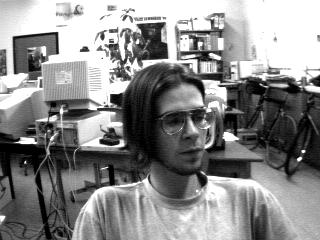
* sample graphic is handy to have too. (Bad pic of me)
* The best way to get ahold of me is through my
* homepage. There's
* lots of goodies there too.
* @version 1.0.1 August 22nd 1996
* @author Stephen Manley - smanley@eagle.uccb.ns.ca
*/
//
public class DCT
{
    /**
     * DCT Block Size - default 8
     */
    public int N        = 8;

    /**
     * Image Quality (0-25) - default 25 (worst image / best compression)
     */
    public int QUALITY  = 25;

    /**
     * Image width - must correspond to imageArray bounds - default 320
     */
    public int ROWS     = 320;

    /**
     * Image height - must correspond to imageArray bounds - default 200
     */
    public int COLS     = 240;

    /**
     * The ZigZag matrix.
     */
    public int zigZag[][] = new int[64][2];

    /**
     * Cosine matrix. N * N.
     */
    public double c[][]        = new double[N][N];

    /**
     * Transformed cosine matrix, N*N.
     */
    public double cT[][]       = new double[N][N];

    /**
     * Quantitization Matrix.
     */
    public int quantum[][]     = new int[N][N];

    /**
     * DCT Result Matrix
     */
    public int resultDCT[][] = new int[ROWS][COLS];

    /**
     * Constructs a new DCT object. Initializes the cosine transform matrix
     * these are used when computing the DCT and it's inverse. This also
     * initializes the run length counters and the ZigZag sequence. Note that
     * the image quality can be worse than 25 however the image will be
     * extemely pixelated, usually to a block size of N.
     *
     * @param QUALITY The quality of the image (0 best - 25 worst)
     *
     */
    public DCT(int QUALITY)
    {
        initZigZag();
        initMatrix(QUALITY);
    }


    /**
     * This method sets up the quantization matrix using the Quality parameter
     * and then sets up the Cosine Transform Matrix and the Transposed CT.
     * These are used by the forward and inverse DCT. The RLE encoding
     * variables are set up to track the number of consecutive zero values
     * that have output or will be input.
     * @param quality The quality scaling factor
     */
    private void initMatrix(int quality)
    {
        int i;
        int j;

        for (i = 0; i < N; i++)
        {
            for (j = 0; j < N; j++)
            {
                quantum[i][j] = (1 + ((1 + i + j) * quality));
            }
        }

        for (j = 0; j < N; j++)
        {
            double nn = (double)(N);
            c[0][j]  = 1.0 / Math.sqrt(nn);
            cT[j][0] = c[0][j];
        }

        for (i = 1; i < 8; i++)
        {
            for (j = 0; j < 8; j++)
            {
                double jj = (double)j;
                double ii = (double)i;
                c[i][j]  = Math.sqrt(2.0/8.0) * Math.cos(((2.0 * jj + 1.0) * ii * Math.PI) / (2.0 * 8.0));
                cT[j][i] = c[i][j];
            }
        }
    }

    /**
     * Initializes the ZigZag matrix.
     */
    private void initZigZag()
    {
        zigZag[0][0] = 0; // 0,0
        zigZag[0][1] = 0;
        zigZag[1][0] = 0; // 0,1
        zigZag[1][1] = 1;
        zigZag[2][0] = 1; // 1,0
        zigZag[2][1] = 0;
        zigZag[3][0] = 2; // 2,0
        zigZag[3][1] = 0;
        zigZag[4][0] = 1; // 1,1
        zigZag[4][1] = 1;
        zigZag[5][0] = 0; // 0,2
        zigZag[5][1] = 2;
        zigZag[6][0] = 0; // 0,3
        zigZag[6][1] = 3;
        zigZag[7][0] = 1; // 1,2
        zigZag[7][1] = 2;
        zigZag[8][0] = 2; // 2,1
        zigZag[8][1] = 1;
        zigZag[9][0] = 3; // 3,0
        zigZag[9][1] = 0;
        zigZag[10][0] = 4; // 4,0
        zigZag[10][1] = 0;
        zigZag[11][0] = 3; // 3,1
        zigZag[11][1] = 1;
        zigZag[12][0] = 2; // 2,2
        zigZag[12][1] = 2;
        zigZag[13][0] = 1; // 1,3
        zigZag[13][1] = 3;
        zigZag[14][0] = 0; // 0,4
        zigZag[14][1] = 4;
        zigZag[15][0] = 0; // 0,5
        zigZag[15][1] = 5;
        zigZag[16][0] = 1; // 1,4
        zigZag[16][1] = 4;
        zigZag[17][0] = 2; // 2,3
        zigZag[17][1] = 3;
        zigZag[18][0] = 3; // 3,2
        zigZag[18][1] = 2;
        zigZag[19][0] = 4; // 4,1
        zigZag[19][1] = 1;
        zigZag[20][0] = 5; // 5,0
        zigZag[20][1] = 0;
        zigZag[21][0] = 6; // 6,0
        zigZag[21][1] = 0;
        zigZag[22][0] = 5; // 5,1
        zigZag[22][1] = 1;
        zigZag[23][0] = 4; // 4,2
        zigZag[23][1] = 2;
        zigZag[24][0] = 3; // 3,3
        zigZag[24][1] = 3;
        zigZag[25][0] = 2; // 2,4
        zigZag[25][1] = 4;
        zigZag[26][0] = 1; // 1,5
        zigZag[26][1] = 5;
        zigZag[27][0] = 0; // 0,6
        zigZag[27][1] = 6;
        zigZag[28][0] = 0; // 0,7
        zigZag[28][1] = 7;
        zigZag[29][0] = 1; // 1,6
        zigZag[29][1] = 6;
        zigZag[30][0] = 2; // 2,5
        zigZag[30][1] = 5;
        zigZag[31][0] = 3; // 3,4
        zigZag[31][1] = 4;
        zigZag[32][0] = 4; // 4,3
        zigZag[32][1] = 3;
        zigZag[33][0] = 5; // 5,2
        zigZag[33][1] = 2;
        zigZag[34][0] = 6; // 6,1
        zigZag[34][1] = 1;
        zigZag[35][0] = 7; // 7,0
        zigZag[35][1] = 0;
        zigZag[36][0] = 7; // 7,1
        zigZag[36][1] = 1;
        zigZag[37][0] = 6; // 6,2
        zigZag[37][1] = 2;
        zigZag[38][0] = 5; // 5,3
        zigZag[38][1] = 3;
        zigZag[39][0] = 4; // 4,4
        zigZag[39][1] = 4;
        zigZag[40][0] = 3; // 3,5
        zigZag[40][1] = 5;
        zigZag[41][0] = 2; // 2,6
        zigZag[41][1] = 6;
        zigZag[42][0] = 1; // 1,7
        zigZag[42][1] = 7;
        zigZag[43][0] = 2; // 2,7
        zigZag[43][1] = 7;
        zigZag[44][0] = 3; // 3,6
        zigZag[44][1] = 6;
        zigZag[45][0] = 4; // 4,5
        zigZag[45][1] = 5;
        zigZag[46][0] = 5; // 5,4
        zigZag[46][1] = 4;
        zigZag[47][0] = 6; // 6,3
        zigZag[47][1] = 3;
        zigZag[48][0] = 7; // 7,2
        zigZag[48][1] = 2;
        zigZag[49][0] = 7; // 7,3
        zigZag[49][1] = 3;
        zigZag[50][0] = 6; // 6,4
        zigZag[50][1] = 4;
        zigZag[51][0] = 5; // 5,5
        zigZag[51][1] = 5;
        zigZag[52][0] = 4; // 4,6
        zigZag[52][1] = 6;
        zigZag[53][0] = 3; // 3,7
        zigZag[53][1] = 7;
        zigZag[54][0] = 4; // 4,7
        zigZag[54][1] = 7;
        zigZag[55][0] = 5; // 5,6
        zigZag[55][1] = 6;
        zigZag[56][0] = 6; // 6,5
        zigZag[56][1] = 5;
        zigZag[57][0] = 7; // 7,4
        zigZag[57][1] = 4;
        zigZag[58][0] = 7; // 7,5
        zigZag[58][1] = 5;
        zigZag[59][0] = 6; // 6,6
        zigZag[59][1] = 6;
        zigZag[60][0] = 5; // 5,7
        zigZag[60][1] = 7;
        zigZag[61][0] = 6; // 6,7
        zigZag[61][1] = 7;
        zigZag[62][0] = 7; // 7,6
        zigZag[62][1] = 6;
        zigZag[63][0] = 7; // 7,7
        zigZag[63][1] = 7;
    }

    /**
     * This method preforms a matrix multiplication of the input pixel data matrix
     * by the transposed cosine matrix and store the result in a temporary
     * N * N matrix. This N * N matrix is then multiplied by the cosine matrix
     * and the result is stored in the output matrix.
     *
     * @param input The Input Pixel Matrix
     * @returns output The DCT Result Matrix
     */
    public int[][] forwardDCT(char input[][])
    {
        int output[][] = new int[N][N];
        double temp[][] = new double[N][N];
        double temp1;
        int i;
        int j;
        int k;

        for (i = 0; i < N; i++)
        {
            for (j = 0; j < N; j++)
            {
                temp[i][j] = 0.0;
                for (k = 0; k < N; k++)
                {
                    temp[i][j] += (((int)(input[i][k]) - 128) * cT[k][j]);
                }
            }
        }

        for (i = 0; i < N; i++)
        {
            for (j = 0; j < N; j++)
            {
                temp1 = 0.0;

                for (k = 0; k < N; k++)
                {
                    temp1 += (c[i][k] * temp[k][j]);
                }

                output[i][j] = (int)Math.round(temp1);
            }
        }

        return output;
    }

    /**
     * This method reads in DCT codes  dequanitizes them
     * and places them in the correct location. The codes are stored in the
     * zigzag format so they need to be redirected to a N * N block through
     * simple table lookup. After dequantitization the data needs to be
     * run through an inverse DCT.
     *
     * @param inputData 8x8 Array of quantitized image data
     * @param zigzag Boolean switch to enable/disable zigzag path.
     * @returns outputData A N * N array of de-quantitized data
     *
     */
    public int[][] dequantitizeImage(int[][] inputData, boolean zigzag)
    {
        int i = 0;
        int j = 0;
        int a = 0;
        int b = 0;
        int row;
        int col;
        int outputData[][] = new int[N][N];

        double result;

        if (zigzag)
        {
            for (i=0; i<(N*N); i++)
            {
                row = zigZag[i][0];
                col = zigZag[i][1];

                result = inputData[row][col] * quantum[row][col];
                outputData[row][col] = (int)(Math.round(result));
            }
        }

        else
        {
            for (i=0; i<8; i++)
            {
                for (j=0; j<8; j++)
                {
                    result = inputData[i][j] * quantum[i][j];
                    outputData[i][j] = (int)(Math.round(result));
                }
            }
        }

        return outputData;
    }

    /**
     * This method orders the DCT result matrix into a zigzag pattern and then
     * quantitizes the data. The quantitized value is rounded to the nearest integer.
     * Pixels which round or divide to zero are the loss associated with
     * quantitizing the image. These pixels do not display in the AWT. (null)
     * Long runs of zeros and the small ints produced through this technique
     * are responsible for the small image sizes. For block sizes < or > 8,
     * disable the zigzag optimization. If zigzag is disabled on encode it
     * must be disabled on decode as well.
     *
     * @param inputData 8x8 array of DCT image data.
     * @param zigzag Boolean switch to enable/disable zigzag path.
     * @returns outputData The quantitized output data
     */
    public int[][] quantitizeImage(int inputData[][], boolean zigzag)
    {
        int outputData[][] = new int[N][N];
        int i = 0;
        int j = 0;
        int a = 0;
        int b = 0;
        int row;
        int col;

        double result;

        if (zigzag)
        {
            for (i = 0; i < (N*N); i++)
            {
                row = zigZag[i][0];
                col = zigZag[i][1];
                result = (inputData[row][col] / quantum[row][col]);
                outputData[row][col] = (int)(Math.round(result));
            }

        }

        else
        {
            for (i=0; i

     * This does not huffman code,
     * it uses a minimal run-length encoding scheme. Huffman, Adaptive Huffman
     * or arithmetic encoding will give much better preformance. The information
     * accepted is quantitized DCT data. The output array should be
     * scanned to determine where the end is.
     *
     * @param image Quantitized image data.
     * @returns The string representation of the image. (Compressed)
     */
    public int[] compressImage(int[] QDCT, boolean log)
    {
        int i = 0;
        int j = 0;
        int k = 0;
        int temp = 0;
        int curPos = 0;
        int runCounter = 0;
        int imageLength = ROWS*COLS;

        int pixel[] = new int[ROWS*COLS];

        while((i 4)
            {
                pixel[j] = 255;
                j++;
                pixel[j] = temp;
                j++;
                pixel[j] = runCounter;
                j++;
            }
            else
            {
                for (k=0; k 255)
                {
                    output[i][j] = 255;
                }
                else
                {
                     output[i][j] = (int)Math.round(temp1);
                }
            }
        }

        return output;
    }

    /**
     * This method uses bit shifting to convert an array of two bytes
     * to a integer (16 bits max). Byte 0 is the most signifigant byte
     * and Byte 1 is the least signifigant byte.
     * @param bitSet Two bytes to convert
     * @returns The constructed integer
     */
    private int bytetoInt(byte bitSet[])
    {
        int returnInt = 0;

        byte MSB = bitSet[0];
        byte LSB = bitSet[1];

        returnInt = ((MSB+128) << 8) | (LSB+128);

        return returnInt;
    }

    /**
     * This method uses bit shifting to convert an integer to an array
     * of two bytes, byte 0, the most signifigant and byte 1, the least
     * signifigant.
     * @param count The integer to convert. (16 bit max)
     * @returns The array of two bytes.
     */
    private byte[] inttoByte(int count)
    {
        int LSB = 0;
        int MSB = 0;
        byte bitSet[] = new byte[2];

        if (!(count > 65535))
        {
  	        LSB = ((count & 0x000000ff));
            MSB = ((count & 0x0000ff00) >> 8);
        }
        else
        {
            System.out.println("Integer > than 16 bit. Exiting..");
            System.exit(count);
        }

        bitSet[0] = (byte)(MSB-128);
        bitSet[1] = (byte)(LSB-128);

        return bitSet;
    }
}
//