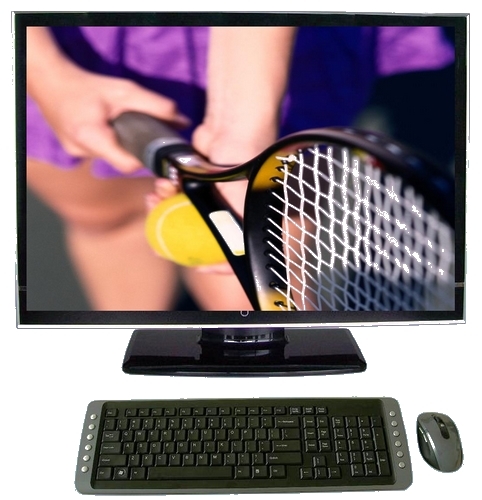
Writing in Lakartidningen, Dr. Mallmin introduces "Computer Arm -- a new kind of pain problem" (vol: 101, iss: 15-16, pg: 1402-07, 2004, PUBMED ID 15146669). The term "Computer Arm" is new, but repetitive stress ailments probably go back to the earliest forms of manual labor; whether hunter-gatherer-related, farm-related, craft-related, assembly-line-related, the stress is particular to the repetitive movement or posture involved. The term "Computer Arm" brings to the forefront what has become a common ailment of Technological Man.
A search of the electronic version of Index Medicus, www.pubmed.gov, brings many results on the topic of computer-related repetitive stress, such as:
Although much has been written on the topic, there is no consensus on how to treat repetitive stress ailments. A Cochrane systematic review: "Ergonomic and physiotherapeutic interventions for treating work-related complaints of the arm, neck or shoulder in adults" was unable to find any consistent evidence for the benefits of ergonomic vs. non-ergonomic keyboards, exercise vs. massage, taking breaks vs. no breaks, manual therapy and massage vs. exercises and manual therapy (Europa Medicophysica, vol: 43, iss: 3, pg: 391-405, Sep. 2007, PUBMED ID 17921965).
The Lancet points out that "Repetitive strain injury is not one diagnosis, but is an umbrella term for disorders that develop as a result of repetitive movements, awkward postures, sustained force, and other risk factors" (vol: 369, pg: 1815, May 26, 2007, PUBMED ID 17531890).
Even the term "Repetitive Strain Injury" is controversial, as The Lancet makes clear:
The term repetitive strain injury is controversial and other descriptive terms for the symptoms have been suggested, such as cumulative trauma disorders, occupational cericobrachial disorders, occupational overuse syndrome, upper extremity musculoskeletal disorders, upper limb disorders, and upper limb pain syndromes (vol: 369, pg: 1815, May 26, 2007, PUBMED ID 17531890).
The topic remains clouded in mystification. Perhaps this is because repetitive stress ailments usually develop so gradually; it is hard to locate an initial point of causation -- like watching a mountain erode: we understand intellectually that it is eroding, but we cannot actually stand by and watch it happening. To better see the erosion process we use "time-lapse" photography. To better understand the process of repetitive stress, we could look to instances when the stress happens under conditions of greater force and concentrated effort, as in athletics. For example, a repetitive stress ailment might appear in an office typist after 10 years at the keyboard, while a professional tennis player might develop "tennis elbow" in a much shorter time.
So, we could look to areas like Sports Medicine and Physiotherapy for clues on how to approach computer-related repetitive stress ailments:
Musicians, too, are known to suffer from repetitive stress:
In the social evolutionary quest to avoid manual labor, people sit for hours at computers with their bodies hunched over into misalignment. Our initial hypothesis as to a solution (from the perspective of a physical culturist) is to throw the posture into its opposite: from the "hunched-over the computer" posture to a deep back-bend on a back-bending bench (Plate 1). [NOTE: Please DO NOT try this at home! Get your doctor's approval first.]
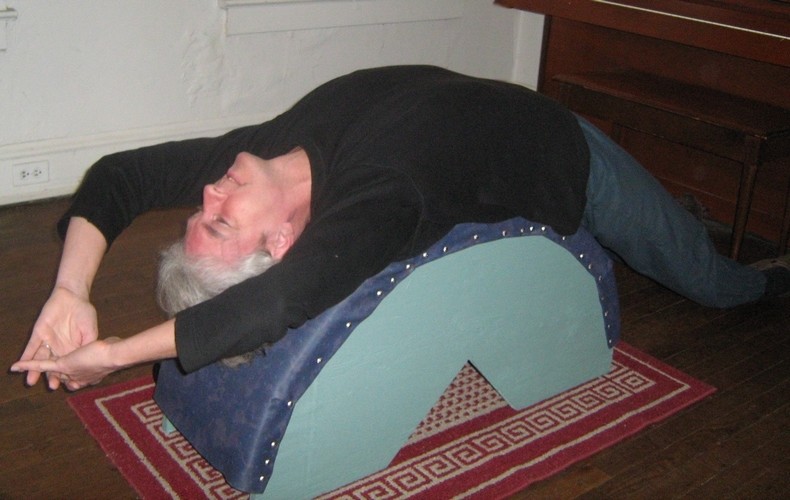
Plate 1: Back-bending on curved bench.
Besides the simple back-bend, try handling small dumbbells (2, 3 or 5-lbs each) while in the bent position, doing a variety of movements, such as pull-overs (Plate 2) and flys (Plate 3) -- as demonstrated by our model using 5-lb dumbbells.
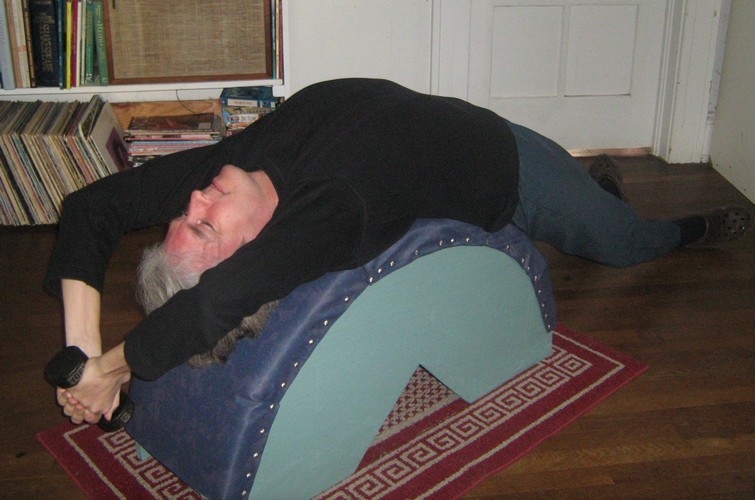
Plate 2: Pull-overs on curved bench (low position).
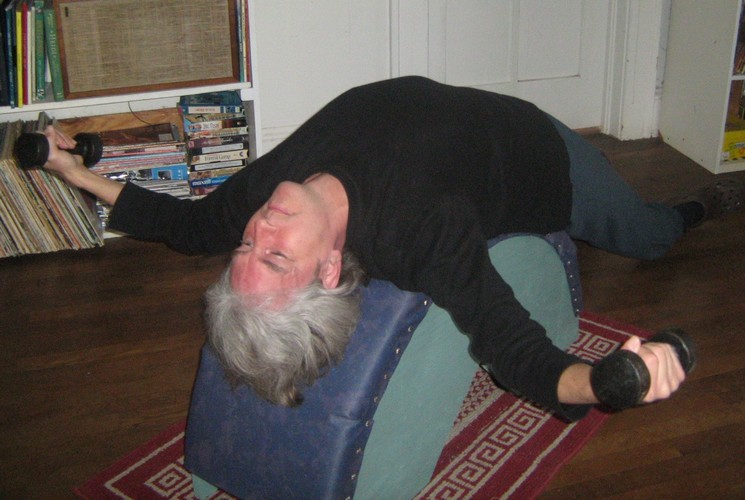
Plate 3: Flys on curved bench.
Even without the use of a back-bending bench, pull-overs done lying cross-wise on a flat bench have practically the same effect (Plate 4).
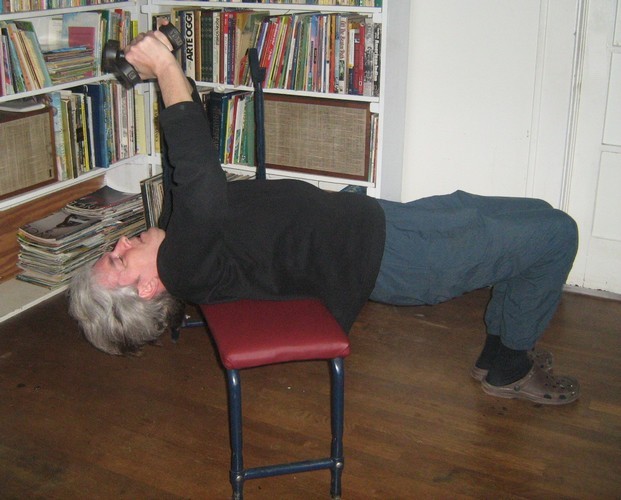
Plate 4: Pull-overs across flat bench (high position).
Precede the back-bending with a warm-up of dance movement, using a set of rattan Escrima sticks for leverage/resistance (Plate 5). Escrima sticks can be bought from martial arts supply dealers like I&I Sports in Gardena, CA (310-715-6800) and Martial Arts Mart in Knoxville, TN (865-686-4862).
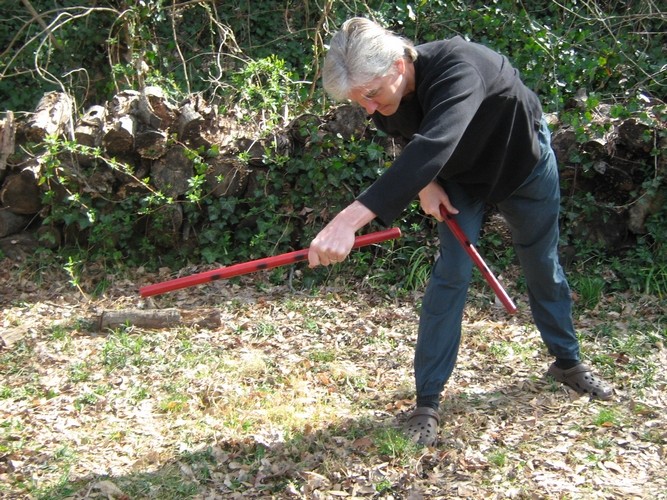
Plate 5: Movement warm-up with Escrima sticks.
After the back-bending, try bent leg lifts on a flat-bench, which has narrow uprights to grip onto (Plate 6). This not only helps the abs (which help the back), but it brings the back into a more normal posture after having done all the back-bending. This back-bending/bent leg lift sequence can be done two or three times a week as part of a broader fitness regimen.
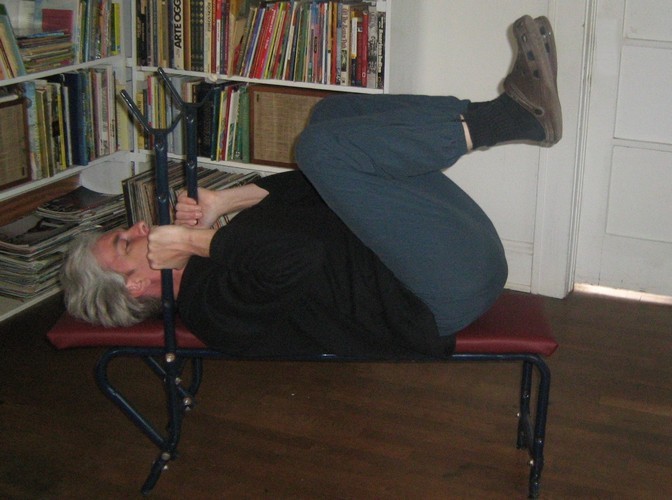
Plate 6: Bent leg lifts on flat bench with narrow uprights.
This article is presented as a starting point for others who are researching this all-too-human malady of the Computer Age: "Computer Arm" (and assorted repetitive stress or posture-related ailments).
5-March-2009 / Photos by Sara Willi / Postures by Ted Willi.
11-March-2009
Dear Ted:
I think computer posture will wreak havoc on our bodies for many generations to come.
Regarding your site, the picture where the model is reclined with back arched over a floor apparatus with his arms spread-eagled with weights: . . . To me this pose looks like heaven (for the stretch). But adding the weights is another level.
I have been doing West African dance for years to counteract computer posture. There are many movements where the chest is opened and the arms are extended out to full reach and movement is done the full range circle. It feels wonderful!
The dance absolutely eliminates pain, and I have specifically gone to class to deal with pain. The movements are opposite from sitting at the computer plus there is the added benefit of cardio, circulation, cleansing, endorphins.
Good luck with your research,
Dee Dee Castro
15-June-2009
The Cleveland Clinic has published an article on a new technology-related ailment -- CELL PHONE ELBOW:
12-Sept-2009

"Air Kenya" by Chris Minihane
http://blog.crocs.com/2009/09/11/photo-friday-air-kenya
Kenyan, lean muscles.
Red ensemble jumping high.
Noble levity!
28-March-2010
Weightlifters who have lost THE WILL TO LIFT must apply themselves in another sport, whether it is endurance-oriented like long-distance or fast-walking (THE EFFORT TO ENDURE), or movement-oriented like yoga, dance or martial arts (THE MOTIVE TO MOVE). An especially interesting (and potentially useful) martial arts movement form is Stick Fighting, easy to practice at home and requires a minimal investment in equipment -- a set of Escrima sticks is a great start, and the Yawara has a certain mystique:
"Modesty flexed her fingers round the little object in her right hand.
It was a kongo, or yawara stick, a thing of hard smooth wood, shaped
like an elongated dumbbell so that the shaft fitted into the palm
with the mushroom-shaped ends protruding from the clenched fist."
(Modesty Blaise by Peter O'Donnell (NY: Doubleday, 1965)
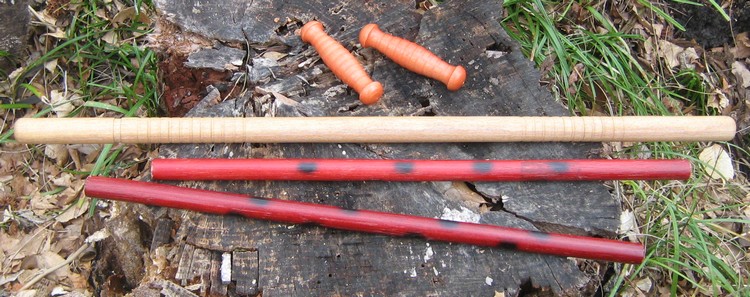
Movement tools: Yawara sticks, Riot Baton and Escrima sticks.
Recommended theme music for a STICK FIGHTING movement workout: Rolling Stones "Dirty Work" (1986): One Hit (To The Body), Fight, Winning Ugly, etc. Recommended training manual: Basic Stick Fighting for Combat by Michael D. Echanis (Santa Clarita, CA: Ohara Publications, 1978).
8-April-2010
"The value of joyousness in physical activity cannot be overrated as a potent factor in improving the physiological functioning of the entire body," writes Dr. Josephine Rathbone in the 5th edition of her Corrective Physical Education (1954): "Many quite satisfactory 'systems' of body building are in popular vogue today, from Danish gymnastics to certain 'schools' of the creative dance. ...They establish an exhilarating atmosphere and concentrate on joyous activity. As far as can be judged, no 'system' which does not subscribe to this general principle makes any claims for improving the body."
17-March-2011

Thoughts and prayers are with the Japanese as they work to overcome the tragic earthquake and tsunami. Without doubt they will succeed at rebuilding and rejoice in the bright day that Amaterasu Omikami shines upon them.
26-March-2011
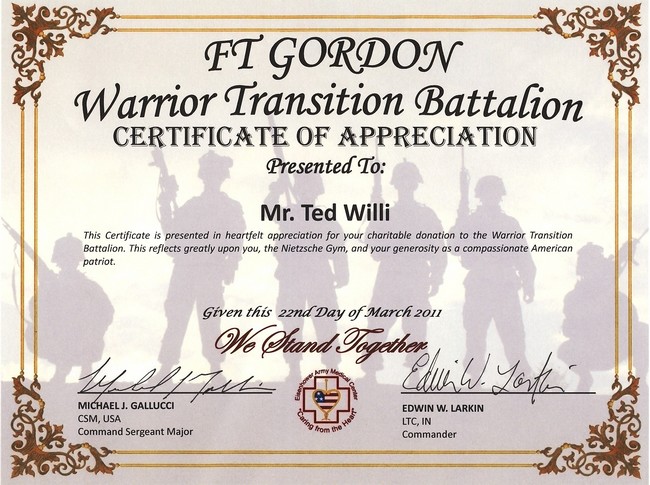
[Update 14-June-2014]
Give me, God, what no one else asks for;
I ask not for wealth, or for success or health;
People ask you so often for all that,
That you cannot have any left.
Give me what people refuse to accept from you.
I want insecurity and disquietude,
I want turmoil and the brawl.
If you should give them to me,
Let me be sure to have them always,
For I will not always have the courage to ask for them.
May God be with you, my fine young Marines,
As you head out once again
Into the heat of the Iraqi sun,
Into the still of the dark night,
To close with the enemy.
Beside you, I'd do it all again. Semper Fidelis.
s/ Mattis
4-Feb-2012

Great to hear on the radio a new song by Kelly Clarkson, with lyrics:
What doesn't kill you makes you stronger
Stand a little taller
Doesn't mean I'm lonely when I'm alone
What doesn't kill you makes a fighter
Footsteps even lighter
Doesn't mean I'm over 'cause you're gone
26-Feb-2016
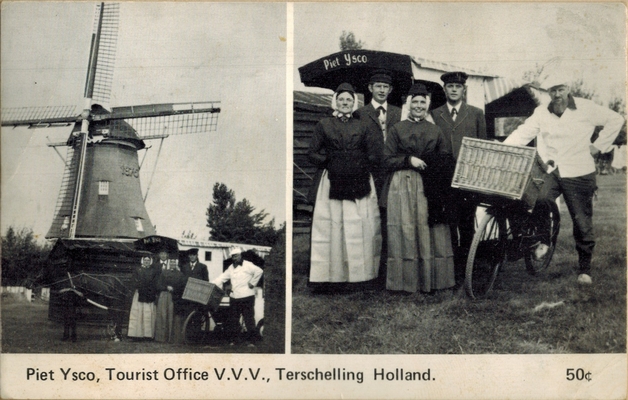
When I was a teenager I had a Schwinn Paramount road bike with a 24" frame, "sew-up" tires, Brooks saddle, Campy components and Cinelli handlebars. I rode this everywhere, including a stretch in 1978 from Port Huron, Michigan, to London, Ontario, and on to Niagara Falls. On the way to London, Ontario, I met PIET YSCO from Holland. He was riding West and I was riding East and we both stopped at the small grocery store along that straight country road. Piet sold ice cream to tourists at home and rode abroad in the off-season. He was riding a traditional "heavy-duty" bicycle wearing wooden shoes while I had a "racing bike" (as he described it). Piet later rode down to see me in Florida. He was going to visit a town northwest of Mobile, Alabama, that has a Dutch-sounding name -- which he showed me on his map, but I cannot find today. Piet didn't make it through the Mobile tunnel and I blame myself to this day that I could not convince him to take a different route.
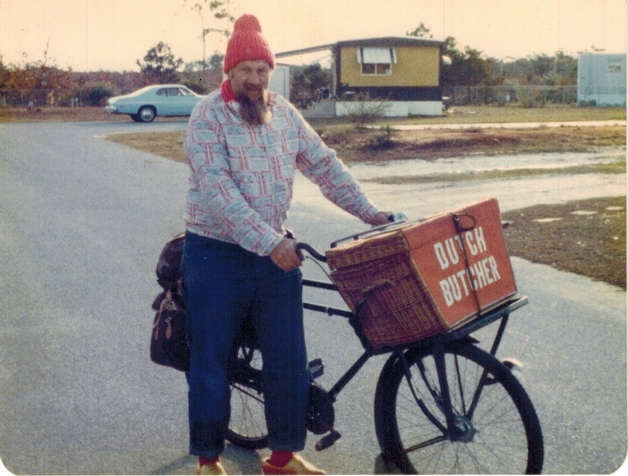
Piet Ysco visiting the Florida panhandle in 1978.
22-June-2020

15-Aug-2023
Dropped a donation at the HABITAT REFURB STORE today and found in the book section: "The FORBES Book of Business Quotations" (1997), clocking in at a chunky 992 pages! Go ahead, ask me for something on practically any topic and I'll zing it back at you.
FORBES was once my favorite magazine and I read it from cover to cover every two weeks. That was the Malcolm and Steve Forbes era. I have "Outlaw Biker" magazines from May 1988 and November 1989 featuring Malcolm as the "Billionaire Biker." Malcolm rode bikes! And his magazine, FORBES "The Capitalist Tool," was the best business magazine ever!
Steve took over and did a great job even into his run into presidential politics. In 2002, I visited Callaway Gardens in western Georgia and bought a booklet called "What Is An Executive" by Cason J. Callaway and I sent it to Steve. He responded by sending me a "Capitalist Tool" necktie which I hold in sacred trust.
When the new designers of the magazine took over and instead of featuring diverse images of industry on the cover and only formal portraits of corporate executives, I stopped subscribing.
For the benefit of artists and designers, I'm posting a photo of some of my favorite FORBES covers from when I was a subscriber.

Like those boats which are returning
Across the open-sea of Ashiya
Where the waves run high,
I think that I too shall pass
Scatheless through (the storms of) life.
--Saigyo Hoshi (1118-1190 A.D.)
Trans. by Arthur Waley, "Japanese Poetry: The Uta", 1919